 Workplace Labs
The Hidden Power of AI Adoption: 3 Wins Beyond Efficiency
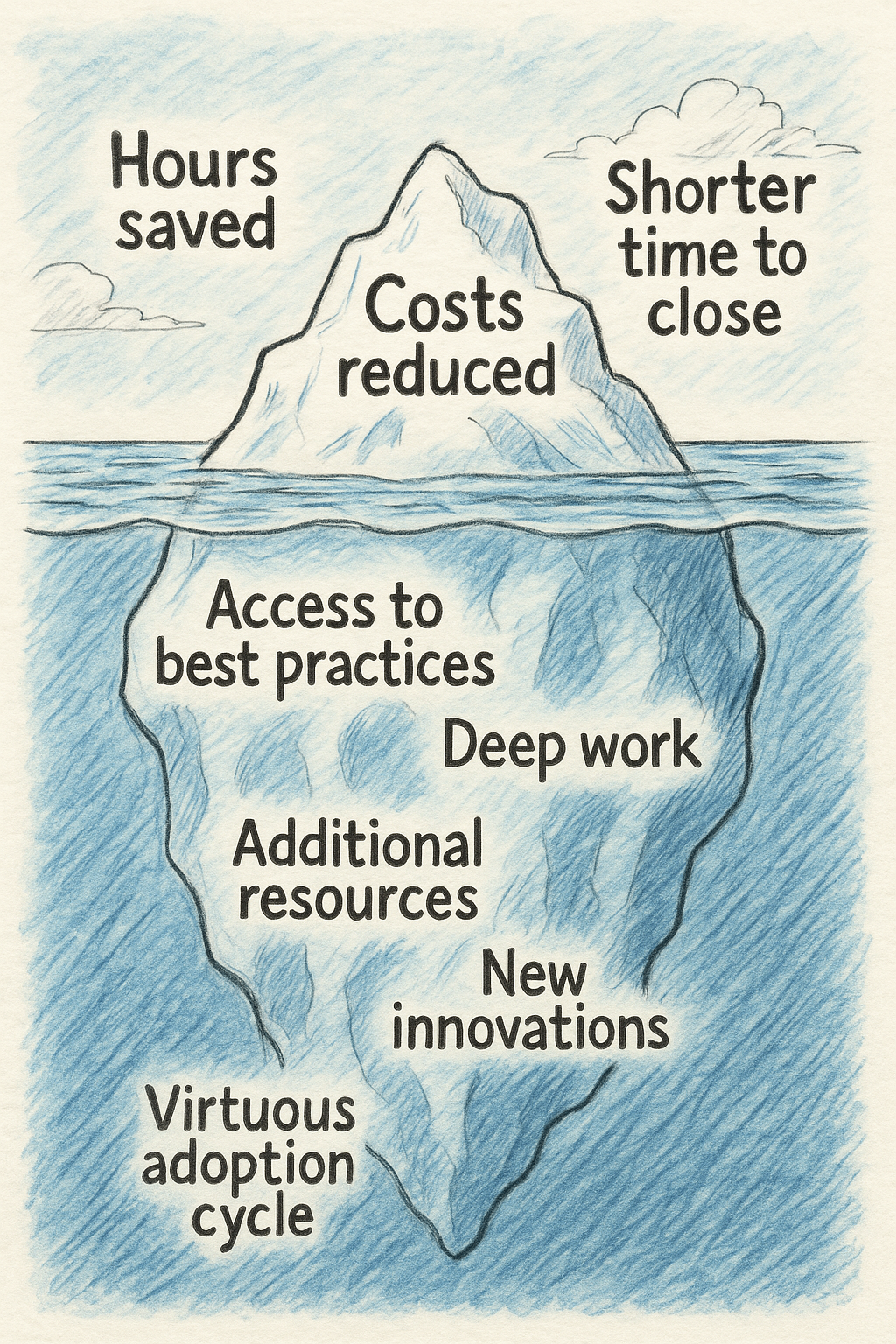
When I ask our training program applicants why they want to adopt AI, nearly three-quarters say they want AI to help them be more efficient.
Specifically, 70% say that 'gaining operational efficiency' or 'automating repetitive tasks' are the primary reasons they're interested in learning about AI.
That's understandable. Efficiency gains are a reasonable starting point to justify AI investment. Its access to a vast swath of human knowledge and tireless nature make it a helpful efficiency booster for many tasks, especially as companies fixate on reducing costs normalized by the "year of efficiency".
Still, AI tools cost time and money to adopt. Any technology rollout requires change management, upskilling, and redesigning jobs to have an impact at scale. But what if efficiency is just the beginning? What are the benefits of AI adoption beyond "just" efficiency? Is there any more juice worth the squeeze?
Research and firsthand experience training HR professionals in AI skills reveal three overlooked benefits of AI adoption that not only increase how early adopters add value, they also help overcome the real fears of job replacement…
1. The Deep Work Dividend
AI can save time from tedious, repetitive work. For example, platforms such as Paradox and Leena AI make it easier for employees to get answers to their HR-related questions.
But the real value isn't only in reducing the time spent on answering repetitive questions or writing lengthy email responses; it's in limiting interruptions that prevent deep work.
With more time set aside for creative problem-solving, workers can focus on the impactful ideas that have been persistently stuck in the backlog.
For instance, we often hear HR business partners and people analytics specialists complain about finishing one engagement survey cycle only in time to start the next one. With AI helping structure and analyse engagement survey data, the team can spend time applying the findings to targeted intervention design and delivery.
2. The Confidence Catalyst
HR teams often find themselves at the back of the line for tech resources. Many of our training participants are just now getting access to tools like ChatGPT or Copilot, creating a frustrating cycle: without AI access, teams struggle to prove value, making it harder to secure future investments.
But AI also provides a breakthrough through rapid experimentation. Even with limited access to AI citizen development tools, such as Lovable, Bolt, and Bubble, teams can quickly build compelling prototypes that demonstrate real value.
Take one of our trainees who tackled cross-cultural communication challenges. Using Lovable, they built a simple but effective chatbot that helps global teams navigate cultural differences. This working prototype not only proved the concept but also attracted enthusiastic stakeholders across multiple countries. Their initial experiment has evolved into a collaborative project with growing credibility and support.
This pattern of quick wins creates a positive feedback loop: successful experiments attract resources, which enable bigger innovations, which attract more support and adoption.
3. The Democratization Effect
AI is converting static playbooks and resources into living, accessible tools that work for everyone. Instead of dusty PDF guides that quickly become outdated, HR teams are creating dynamic, interactive resources that adapt to each user's needs.
Platforms such as Writer integrate AI tools directly into workplace tools like Slack, taking rigid processes into fluid conversations. A manager preparing for a performance review can now receive real-time guidance, suggested talking points, and best practices, all personalized to their specific situation and company culture. What was once a static checklist becomes an intelligent assistant that helps managers have more meaningful conversations.
The impact is particularly powerful in areas like coaching and development. According to a report by the International Coaching Federation, only 27% of organizations offer coaching to all employees. AI coaching platforms can provide personalized guidance to entire organizations.
These AI coaches don't replace human mentors; instead, they democratize access to coaching fundamentals, helping employees practice difficult conversations, reflect on their growth, and receive consistent feedback.
The result? More employees developing critical skills, with human coaches freed up to focus on complex challenges that require their unique expertise.
Yes, AI delivers the efficiency gains that 70% of adopters initially seek. But as we've seen, focusing solely on efficiency misses the larger opportunity. When implemented thoughtfully, AI creates a multiplier effect: time is freed up for deep work, quick wins build confidence for bigger innovations, and democratized access amplifies impact across the organization.
Three Steps to Make AI Adoption More Fruitful
- Develop the AI literacy of your early adopter champions.Start by identifying and empowering early adopters who can bridge the gap between AI's potential and real workplace needs. Give them structured learning opportunities and protected time to experiment with AI tools. These champions become your internal consultants, helping others see possibilities beyond mere efficiency gains.
- Build a prototype, such as a custom GPT, as a proof of concept.Choose a use case that demonstrates both immediate efficiency gains and longer-term strategic value. This creates a "success story" that builds momentum for broader adoption.
- Invite frontline users to test your prototype and gather their feedback.Make it collaborative from day one. When people feel ownership over the solution, they're more likely to discover innovative applications that transform their work, not just accelerate it.
Efficiency might be your starting point with AI, but it shouldn't be your destination. The leaders making AI work for humans are asking, "What becomes possible now?"