
Keep some friction in the work
Faster execution is useful. So is the part of doing the work that teaches you how to judge it.
June 10, 2026
Topics
AI fluency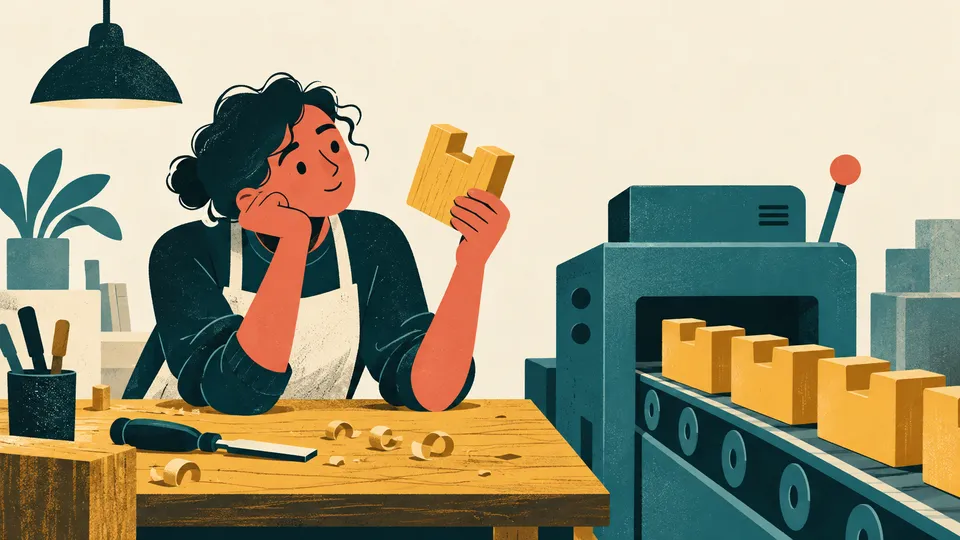
A banking team is choosing to write more code by hand. KPMG’s research points toward richer conversations with AI. Those approaches can coexist: both leave people actively working through a problem. A guide to reusable Cowork skills adds another angle: work through a task before saving the workflow. We think some friction earns its place, especially when it helps you understand why an answer works.
A banking team backs off “Claude-first”
Asgaut Mjølne Söderbom describes his banking software team’s decision to code more manually after finding that its AI approach hurt critical thinking, feedback, and enjoyment.
Our take: One team’s experience doesn’t settle the coding debate, but it deserves better than “you must be prompting wrong.” A workflow can produce code quickly while leaving the team less able to explain or maintain it. The ability to back off an approach is part of being good at this.
Better AI use involves pushing back
KPMG’s account of research with UT Austin describes patterns of collaboration: setting objectives, giving direction, challenging early answers, and refining the result.
Our take: “Use AI more” is a lousy substitute for showing someone what a productive conversation looks like. Start with the moment a colleague catches a weak answer and explains what’s missing. That judgment is teachable, and it gives the rest of the team something much more useful than another collection of magic prompts.
A reusable workflow still needs an owner
Johannes Sundlo’s Cowork setup guide recommends working through a task successfully before turning it into a reusable skill, and assigning someone to keep shared skills current.
Our take: Saving instructions also saves the assumptions inside them. A performance-review skill with an outdated definition of “Exceeds” can spread the same mistake across a team. Before sharing one, have its owner explain the judgment behind the instructions and what would trigger a revision. The payoff is getting to reuse good thinking; ownership keeps that thinking from going stale.
One useful move
Have a paragraph you want to make clearer? Keep your own first draft and ask:
Paragraph: {{paragraph_text}} Read this paragraph as someone unfamiliar with the topic. Point out the one sentence that’s hardest to understand and explain why. Ask me one question that would help clarify it. Wait for my answer before suggesting a rewrite.
Answer in your own words. Then use the suggestion if it expresses what you mean. You get a better paragraph and a little more clarity about your own thinking.
Something fun
Make your chatbot explain an everyday inconvenience as if it were a deeply mysterious scientific phenomenon:
Write a mock scientific abstract about why the office microwave always stops with one second remaining. Include a wildly overconfident hypothesis and a completely mundane explanation the researchers refuse to consider.
The leftovers are cold. The implications are profound.
Built in the past two weeks
We revised our job-description assistant guide to give readers three clear next moves after the first draft: improve its quality, adapt the assistant for team reuse, or design a fuller workflow. The revision also makes the setup more explicit, pairing the work-analysis and job-description steps with Neil’s reference frameworks and instructions for loading them into an assistant.